
How artificial intelligence has changed the daily lives of most companies: the example of Xerox
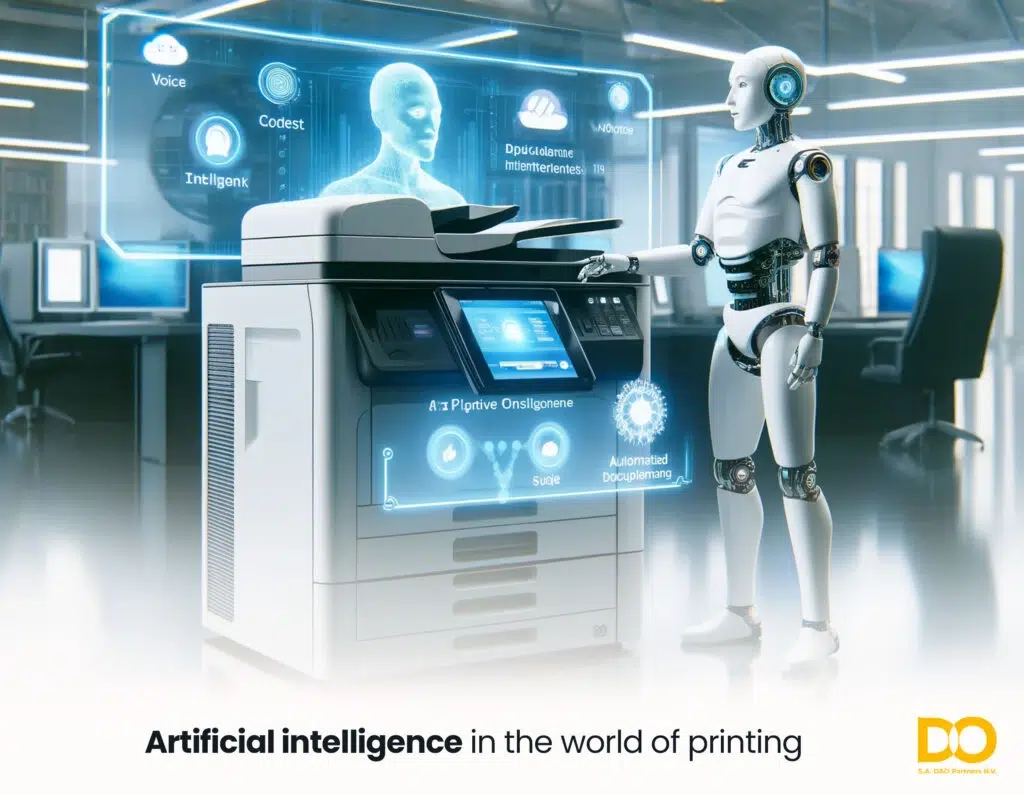
In today’s digital age, more than 60% of workers use artificial intelligence (AI) in their work environment, according to Deloitte. AI is not just a nice tool for students to pass exams, but has become an essential pillar in the world of work, radically transforming businesses around the world. However, this transformation is also causing anxiety: nearly half of those surveyed by Deloitte fear for their professional future. Despite these fears, 63% recognize that artificial intelligence simplifies their daily tasks, proving that artificial intelligence is effective in optimizing work.
Against this backdrop of rapid change, organizations are facing new challenges such as operational efficiency, data security and proper document management. Traditional solutions are often outdated, require constant human intervention and struggle to adapt to the changing demands of modern firms. Associated risks include financial loss and reputational damage from security breaches, making it necessary to implement advanced technologies such as artificial intelligence.
1. ConnectKey from Xerox, the document management tool.
ConnectKey from Xerox is revolutionizing the way documents are managed within businesses. This AI technology integrated into multifunction printing and scanning devices enables intelligent interaction with scanned documents. It recognizes the type of document (invoice, form, technical drawing, etc.) using pre-trained AI models. After recognition, the system uses OCR to convert the scanned images into editable digital text, enabling faster processing and easier searching. Dynamic adjustment of resolution and contrast is performed automatically, ensuring the best possible quality for any type of document. This adaptive capability also learns from user habits and fine-tunes settings to maximize the efficiency of repetitive tasks.
2. Automate your daily work.
Workflow automation with Xerox AI transforms business processes by automating critical tasks such as data entry, accounting and payment approvals. When documents are scanned, artificial intelligence extracts key information such as dates, amounts and names, allowing many administrative functions to be easily automated. By integrating this technology with existing ERP or CRM systems such as SAP or Odoo, customer relationships and assets can be managed seamlessly, optimizing new customer creation, inventory updates and order processing. This linkage also allows for continuous improvement through suggestions based on user feedback, making business processes not only more intelligent but also more adaptive.
3. Predictive analytics, Xerox collects data to provide the best service to its customers.
Xerox’s predictive technology plays a critical role in the maintenance of printing equipment. Using data collected in real time, such as toner usage, the condition of mechanical parts, print cycles and even operating temperature, Xerox’s predictive models are able to detect early warning signs of potential problems. This has had a significant impact on the printing industry. For example, an abnormal rise in temperature or accelerated wear of parts may indicate the need for action in the near future. With this predictive function, preventive maintenance can be planned, minimizing downtime and extending the life of the equipment.
4. Increased security. Protect yourself from cyber attacks.
Security is a critical aspect that Xerox has intensively strengthened with the integration of artificial intelligence. Devices equipped with this solution continuously monitor network and machine activity, including document access patterns and print schedules. Artificial intelligence is capable of detecting abnormal printing or access attempts, such as printing unusual amounts of sensitive documents outside normal business hours. These suspicious activities are reported online to administrators, who can take appropriate action such as restricting access or temporarily blocking a user. This security integration can also be extended to other existing security systems in the company, providing oversight and improved detection of potential risks.
In short, Xerox’s application of artificial intelligence not only enables more efficient document management and workflow automation, but also better forecasting and enhanced security, clearly illustrating the transformative impact of artificial intelligence on the modern workplace.
Frequently asked questions
Is artificial intelligence really used in businesses today?
Yes, widely. According to a Deloitte study, over 60% of workers already use AI in their professional environment, and 63% acknowledge that it simplifies their daily tasks. AI is no longer a gadget: it has become a pillar of operational efficiency, document management and data security. At Xerox, it is integrated directly into multifunction printers to automate repetitive daily tasks.
In practice, which daily tasks can Xerox’s AI automate?
When a document is scanned, the AI automatically extracts the key information — dates, amounts, names — which allows administrative tasks such as data entry, accounting or payment approvals to be automated. The result: less manual entry, fewer errors and faster document processing. Your teams focus on value-adding tasks rather than re-keying.
Can Xerox’s AI be connected to our management software (ERP, CRM)?
Yes. The technology integrates with existing ERP and CRM systems, such as SAP or Odoo, for smooth management of customers and company resources: creating new customers, updating inventories, processing orders. This interconnection also enables continuous improvement, with the system refining its suggestions based on user feedback. Our D&O Partners experts support you with this integration, across Belgium.
How does AI strengthen security against cyberattacks?
Devices equipped with AI continuously monitor activity on the network and on the machines: document access patterns, print times, volumes. The AI detects abnormal behaviour — for example printing an unusual volume of sensitive documents outside working hours — and alerts administrators, who can restrict access or temporarily block a user. This monitoring can extend to the company’s other security systems for an overall view of risks.
Will Xerox’s AI replace employees?
No: its role is to automate repetitive, time-consuming tasks, not to replace people. By relieving your teams of data entry or document sorting, the AI frees up their time for higher-value work — customer relations, analysis, decision-making. Used well, it is a tool to support human work, not a substitute.