
How Xerox Invented the Modern Computer and Inspired Apple and Microsoft
In short: the mouse, windows, icons and the modern graphical user interface were not invented by Apple or Microsoft, but by the researchers of Xerox PARC (Palo Alto Research Center) in the 1970s. The Xerox Alto (1973) was the first computer in history with a graphical user interface, and its vision directly inspired Apple’s Macintosh (1984) and later Microsoft Windows.
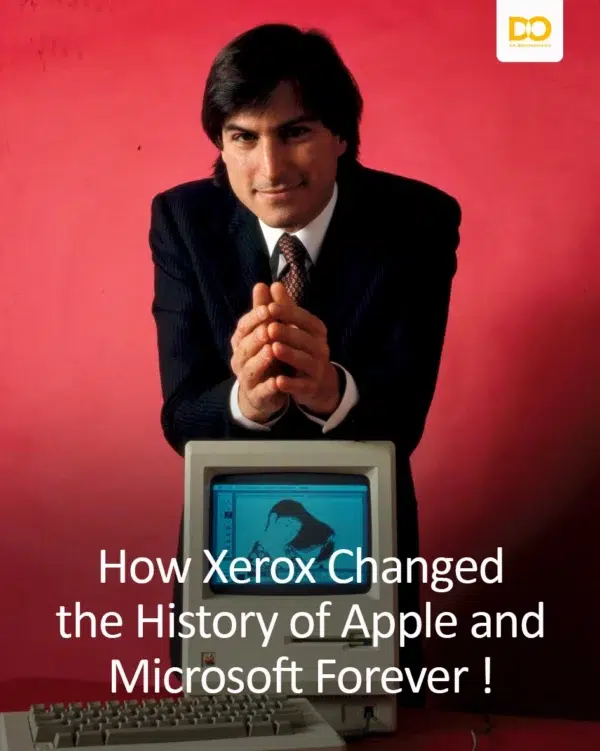
When we talk about the greatest technological revolutions of our time, two names come up immediately: Apple and Microsoft.
The first turned the computer into an object of desire. The second democratised it on a global scale.
Yet behind these two giants lies a much lesser-known story. A story that begins long before the Macintosh, long before Windows, and even long before the personal computer entered our homes.
That story begins at Xerox.
Xerox PARC: the laboratory that imagined modern computing
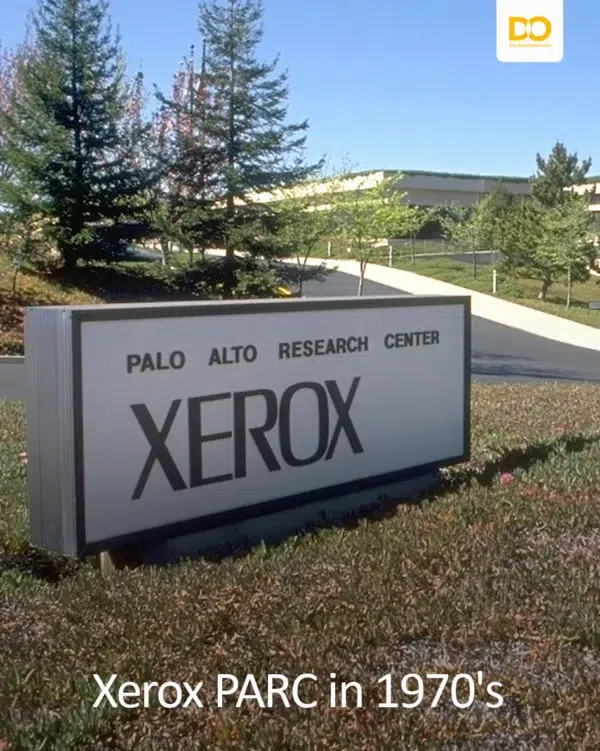
In the early 1970s, while Xerox dominated the global reprographics market, the company decided to invest heavily in research. It created the Palo Alto Research Center, better known as Xerox PARC.
At first glance, nothing really distinguishes this research centre from any other. Yet behind its walls, a handful of engineers and researchers are already imagining the digital world we live in today.
A radically different vision of computing
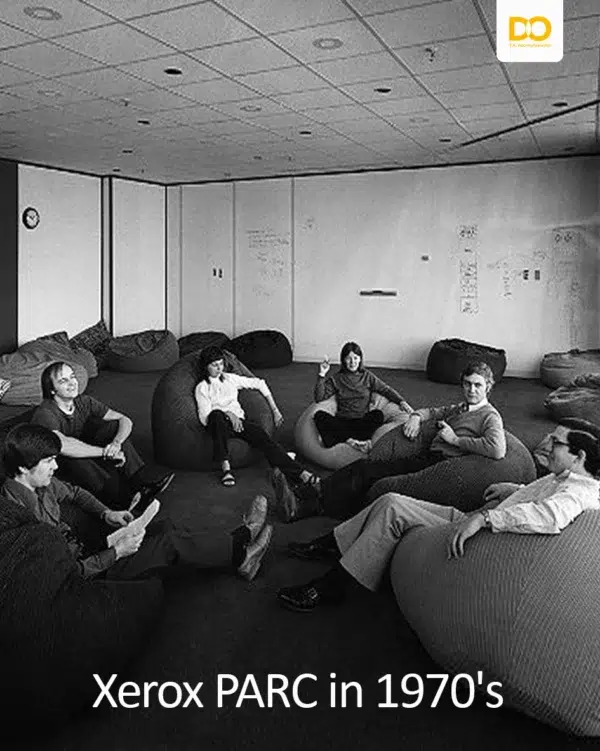
While the computer industry is still working with black screens full of command lines, the Xerox teams dream of visual interfaces, windows, icons and a far more natural way of interacting with machines.
They don’t know it yet, but they are building the future.
The Xerox Alto (1973): the first computer with a graphical user interface
In 1973, the Xerox Alto appears.
Today, its appearance seems primitive. Yet at the time, this machine looked like something straight out of a science fiction film.
For the first time, a user could manipulate windows on screen, move a cursor and work in an intuitive graphical environment.
The mouse and windows: Xerox inventions
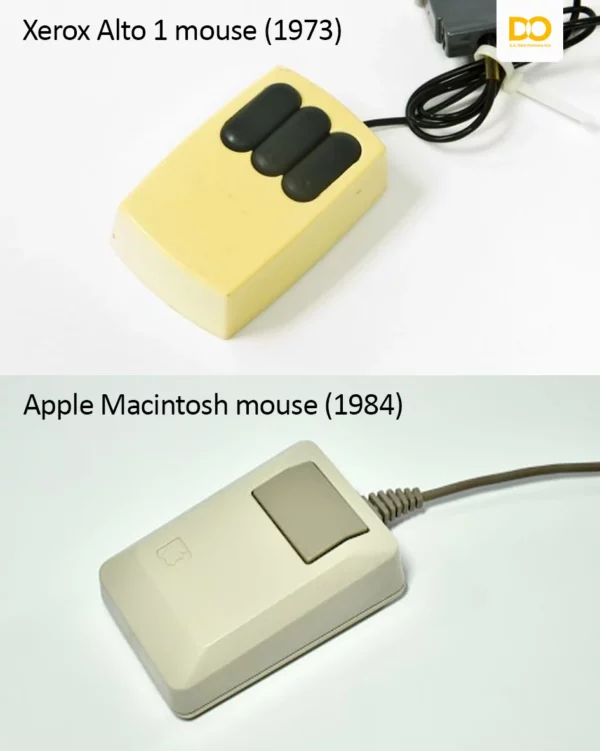
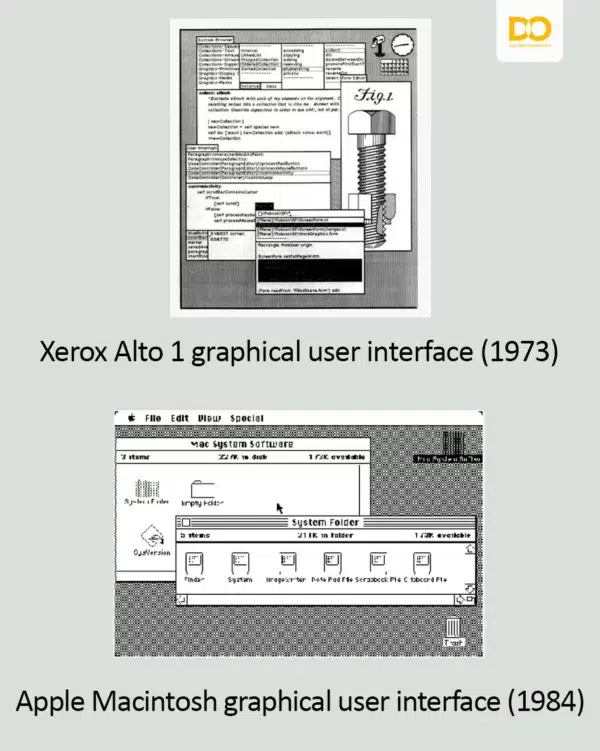
The Alto looked like nothing else on the market at the time.
Above all, it looked like every computer that would come after it.
1979: the Steve Jobs visit that changed Apple’s history
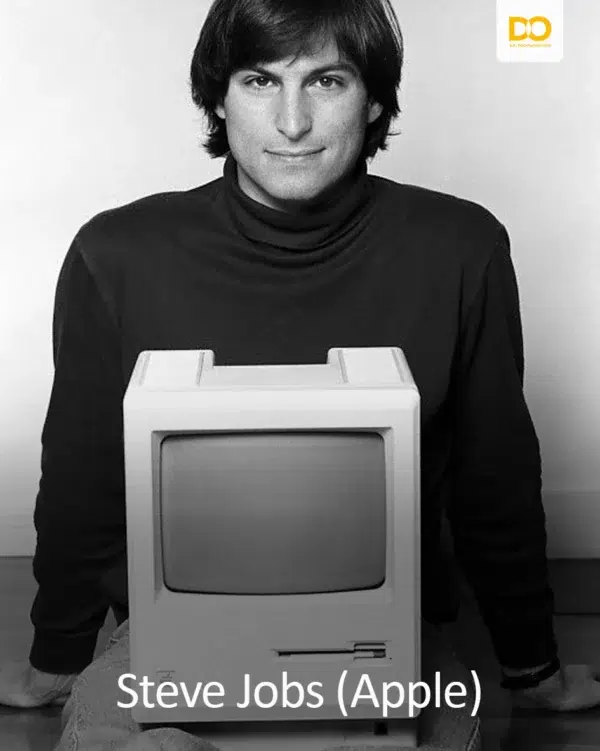
Then comes one of the most famous moments in the history of Silicon Valley.
In 1979, a young entrepreneur named Steve Jobs walks through the doors of Xerox PARC.
What he discovers that day overwhelms him. He sees engineers moving objects on screen with a mouse. He watches windows open and close.
He immediately understands what most executives of the time do not yet see: the future of computing will not be technical. It will be visual.
Years later, the Macintosh would be born from that vision.
The Macintosh (1984): when Apple perfected Xerox’s idea
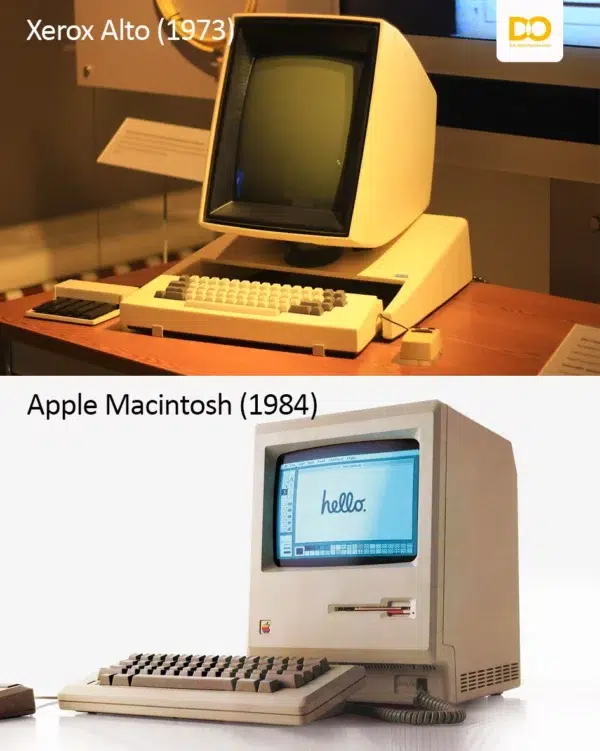
When the Macintosh was launched in 1984, the world marvelled at a simple, elegant and intuitive graphical interface.
Apple perfected the idea. Apple made it accessible. Apple gave it a soul.
But the seed had been planted years earlier, in the laboratories of Xerox.
Microsoft and Windows: the Xerox legacy spreads
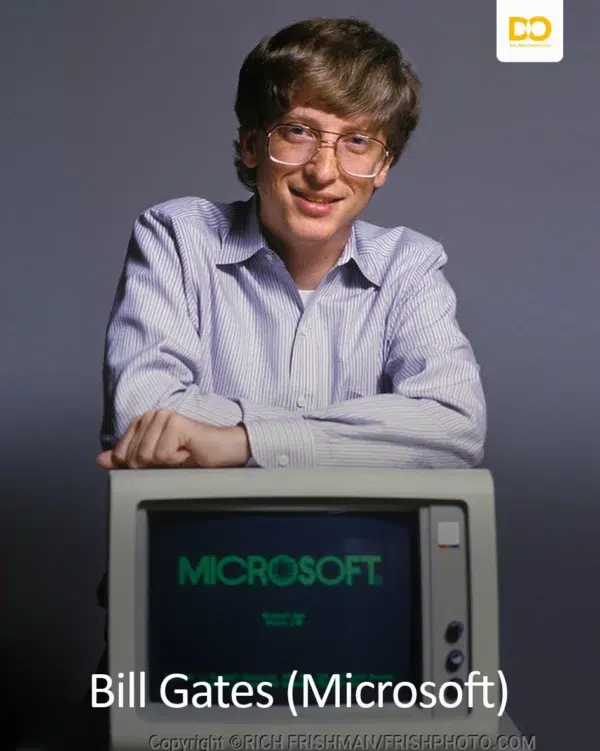
The success of the Macintosh quickly caught the attention of another fast-rising company: Microsoft.
Bill Gates understood in turn that the future belonged to graphical interfaces. A few years later, Windows would become the gateway to computing for hundreds of millions of users.
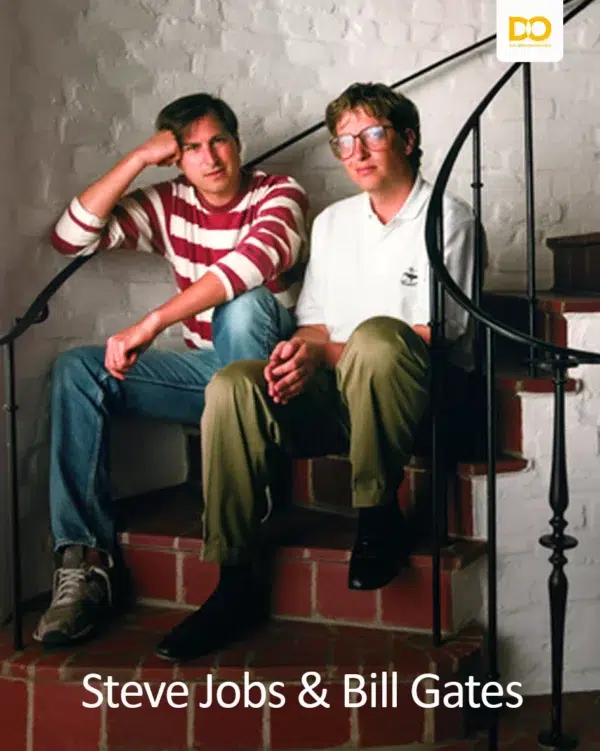
And so the legacy of Xerox spread far beyond its own products.
History often remembers the companies that commercialise innovations. More rarely those that invent them. Yet looking at the journey of Microsoft, Apple and the entire modern computer industry, one conclusion is inescapable: without Xerox, history would probably have been very different.
The Xerox Star (1981): too far ahead of its time
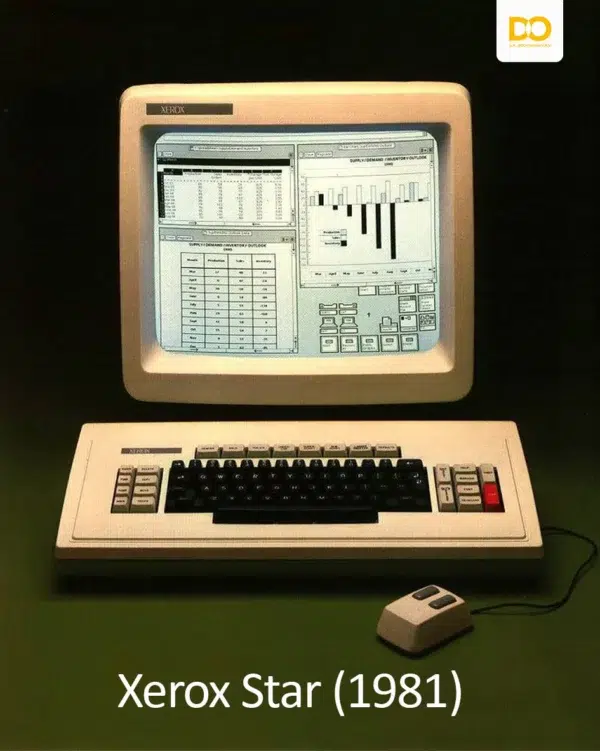
With the Xerox Star, launched in 1981, Xerox once again demonstrated its ability to see further than anyone else.
The computer introduced a user experience that was extraordinarily modern for its time. Too modern, perhaps. The market wasn’t ready yet. But the future was already there.
As is often the case with pioneers, Xerox isn’t always first to market. But it is very often the first to imagine what tomorrow’s market will look like.
The Xerox spirit of innovation, today at D&O Partners in Brussels
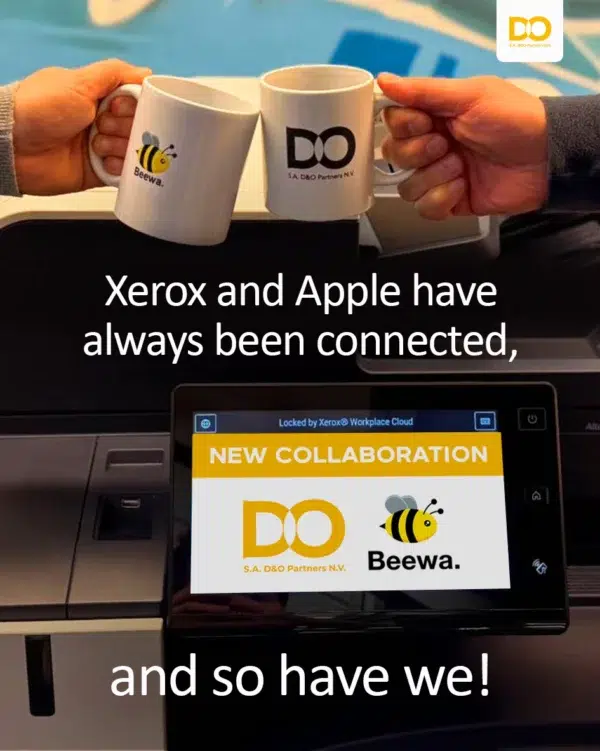
More than fifty years after the creation of Xerox PARC, that spirit of innovation continues to inspire Xerox around the world. You can find it today in the intuitive touchscreen interfaces of Xerox ConnectKey technology, the true heir of the graphical interface born at PARC.
That same drive to anticipate business needs, simplify everyday use and transform ways of working is at the heart of the solutions we offer at D&O Partners, a Xerox dealership established in Brussels since 1994.
And history’s wink doesn’t stop there: Xerox and Apple have always been connected — and so have we. With our Apple in Business service, we support Belgian companies both in their Xerox print environment and in managing their Apple fleet.
The story of Xerox reminds us that true innovation is not simply about improving what already exists. It is about imagining what does not exist yet.
That is exactly what the Xerox researchers did in the 1970s. And it is that same philosophy that continues to drive the partnerships we build today.
Because some companies follow the future. Others create it. Xerox is one of them.
Want to discover our Xerox multifunction printers and Xerox innovation in action? Contact our team in Brussels or visit our showroom.
Frequently asked questions: Xerox, Apple and Microsoft
Who invented the mouse and the graphical user interface?
The concept of the mouse was conceived by Douglas Engelbart, but it was at Xerox PARC that it was first integrated into a complete graphical environment, with the Xerox Alto in 1973. Windows, icons and a cursor: the foundations of modern computing were born at Xerox.
Did Steve Jobs copy Xerox?
In 1979, Steve Jobs visited Xerox PARC as part of a deal: Xerox invested in Apple in exchange for access to its laboratories. Apple drew inspiration from PARC’s graphical interface, perfected it, and made it accessible to the general public with the Macintosh in 1984.
What was the first computer with a graphical user interface?
The Xerox Alto (1973) is considered the first computer with a graphical user interface featuring a mouse, windows and icons. The Xerox Star (1981) was then the first commercial computer to offer this experience.
What remains of Xerox innovation today?
Xerox continues to innovate in modern work environments: ConnectKey touchscreen interfaces, cloud applications, document management and security. In Belgium, D&O Partners has been supporting companies with these technologies for more than 30 years.